sábado, 4 de octubre de 2014

Argentina: deuda odiosa o mala gestión(2)


El juez neoyorquinoThomas Griesa. 

Fondos, parte 2. 
Y en un nivel más fundamental, la culpa recae en un plan monetario mundial cuya base es la deuda y que obliga a la quiebra de algunos países como una necesidad matemática. Como en el juego de las sillas musicales, algunos jugadores deben quedar afuera.
La mayor parte del dinero actual entra en circulación como crédito o deuda bancaria. La deuda con intereses siempre crece más rápidamente que la oferta de dinero, ya que siempre se debe devolver más de lo que el préstamo original había generado. Nunca hay dinero suficiente para todos, a menos que se acreciente lo adeudado.
Como señala el economista Michael Hudson, el sobreendeudamiento crece exponencialmente hasta que el pago se hace imposible. El país se ve obligado al default.
¿Mala gestión fiscal o deuda odiosa?
Además de la imposibilidad del cumplimiento, existe otra defensa que Argentina podría argumentar ante la corte internacional: la “deuda odiosa”.
También denominada deuda ilegítima o execrable, esta teoría jurídica sostiene que la devolución de la deuda externa que un gobierno contrajo contra los intereses del país no debe ser exigible.
Varios países emplearon con éxito ese argumento, entre ellos Ecuador, cuando el presidente Rafael Correa declaró en diciembre de 2008 que la deuda ecuatoriana había sido contraída en el pasado por gobiernos corruptos y despóticos. El argumento de la deuda odiosa permitió que el país sudamericano redujera la suma adeudada en 70 por ciento.
En un artículo publicado en Global Research en noviembre de 2006, Adrián Salbuchi realizó una defensa similar de Argentina. Rastreó el origen de los problemas del país a 1976, cuando su deuda externa era un poco menos de 6,000 millones de dólares y representaba una pequeña parte del producto interno bruto (PIB).
El 24 de marzo de ese año una dictadura cívico-militar derrocó al gobierno elegido constitucionalmente de la presidenta María Estela (Isabel) Martínez de Perón y nombró ministro de Economía a José Martínez de Hoz, que tenía estrechos vínculos con poderosos intereses de la banca privada internacional.
Con el respaldo de la dictadura, Martínez de Hoz aplicó sistemáticamente políticas y leyes económicas y financieras de alto poder destructivo, especulativas, ilegítimas e incluso ilegales, que multiplicaron la deuda pública casi por ocho a 46.000 millones de dólares en unos pocos años.
Todo esto estuvo íntimamente vinculado a los intereses de los grandes círculos bancarios y petroleros internacionales que, en ese momento, necesitaban con urgencia reciclar enormes volúmenes de “petrodólares” generados por las crisis petroleras de 1973 y 1979.
Esos capitales no se invirtieron en la producción ni en la infraestructura industrial, sino que alimentaron la especulación en el mercado financiero argentino de los bancos y corredores locales e internacionales que aprovecharon las altísimas tasas de interés en pesos argentinos ligadas a un tipo de cambio del dólar a medio plazo estable y poco realista.
Salbuchi describe la posterior caída de Argentina en lo que se convirtió en una trampa de deuda por 200,000 millones de dólares, de la cual gran parte era “deuda odiosa” y no debería pagarse.
“Hacer que el Estado argentino – es decir, el pueblo de Argentina – soporte todo el peso de esta tormenta equivale al genocidio y el terrorismo financiero”, según Salbuchi.
“Argentina experimenta actualmente graves dificultades, con más de 50 por ciento de la población sumergida en la pobreza”, añade.
“El Derecho universal básico le otorga al pueblo argentino el derecho de defender legítimamente sus intereses frente a los diversos actores multinacionales y supranacionales que, abusando del enorme poder que ejercen, directa y/o indirectamente impusieron complejas acciones y estrategias que condujeron al problema de la deuda pública”, sostiene.


miércoles, 10 de septiembre de 2014

L.A. newsman José Luis Sierra dies at 56(1)


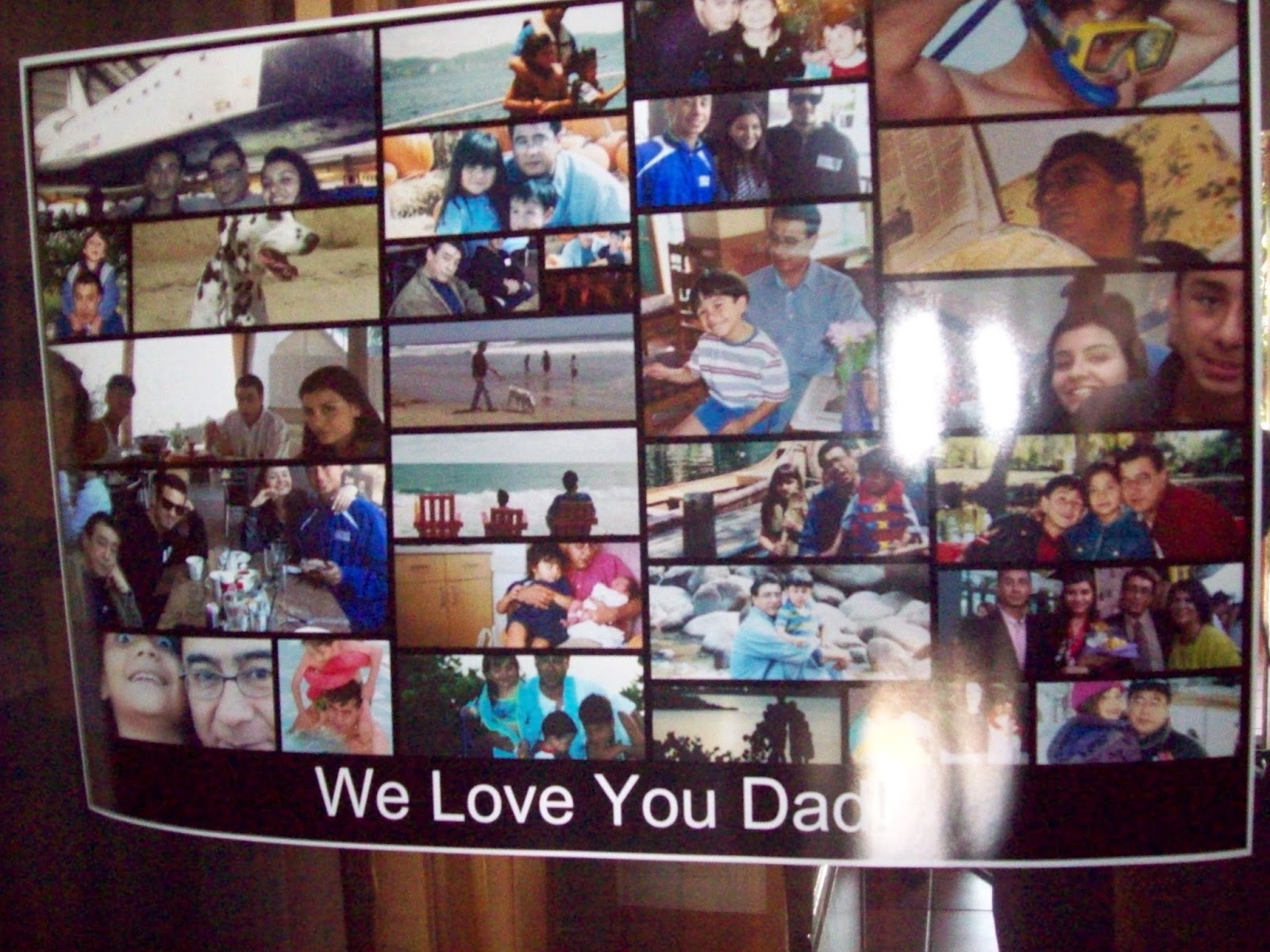
Jose Luis Sierra's family photo collage. 
By Alfredo Santana

Los Angeles journalist José Luis Sierra, a pioneer in the journalism craft who promoted a brand of intelligent street-life news  reporting affecting communities who mostly spoke Spanish died last Sept.5 because of internal stomach bleeding caused by peptic ulcers, said his brother Jorge Sierra. He was 56.

At the funeral services held at Continental Funeral Home in East Los Angeles, Jorge said his brother began feeling sick while at work in Spanish language MundoFox television station on Thursday, Sept. 4, and vomited blood. He drove off to his South Pasadena home, with a crew of co-workers closely following him. However, it was until the next day Jose Luis decided to attend the Huntington Memorial Hospital in Pasadena to get medical treatment.

A surgery was scheduled, but Sierra had lost about 80% of his blood doctors deemed unsafe to proceed. “He probably bled until he passed,” Jorge said. Peptic ulcers usually develop in the small intestine or the stomach.

“We believe he could have survived had he received proper treatment sooner,” Jorge said.

On Sept. 9 about 350 people attended the four-hour  wake, where many praised him for his unique style of news coverage and progressive tendency to report news often ignored by mainstream organizations.

His colleagues and reporters said José Luis Sierra carved a footprint in the Spanish news field in Los Angeles nobody had dared to try. He was a charismatic and courageous newsman, who started his career with the Pacifica Radio station as news autodidact in the early 1980s.

Sierra was born in Mexico City, but as a young child he moved to live with his grandmother in the northern Mexican state of Chihuahua.

At 19, he migrated from Chihuahua to San Diego, California, where he worked as horse groomer and jockey at a ranch with his brother Jorge. Once in California, he immersed in a self-media education, which propelled him to get gigs in local outlets in Los Angeles.  His brother said José Luis had earned an equivalent of a bachelor’s degree in engineering in México.

But his journalistic footprint began when he landed a job as reporter for La Opinión, in the mid-1980s. He worked as the Los Angeles City Hall news reporter. 

In addition, the range of stories he covered included articles about fatherhood, bracero-migrant protests in downtown Los Angeles, medical negligence cases involving day-labor workers, alternative medicine and small business startups owned by migrants, and international trade workshops and conferences in Greater Los Angeles.

He moved on to become the assignment editor at La Opinión, position he held into the early 2000s.

“The Spanish-speaking communities in Los Angeles are in constant transition. For them, we are a valuable tool of information and education, and thorough our news coverage we encourage them to improve their levels of life,” he once said.

He migrated to Univision network, where he also became the assignment editor at KMET Channel 34 in Los Angeles. But that gig was short-lived.

With the arrival of Felipe Calderon to the Mexican presidency,  Sierra became a correspondent for New American Media on the war on drugs. From the state of Chihuahua to México City and beyond, he wrote dozens of articles that depicted the struggles of common people affected by the violence, and fleshed out some of the outrageous shortsightedness the Calderón regime engaged in while combating organized crime. 

All these while receiving a miserable pay.

“I learned a lot from him and from his travels, to where he was so close from being gunned down,” said Jorge. “He often didn’t have money to eat or to rent a room, but he succeeded cobbling the articles. He was really awesome.”

Read Journalist, page 2.

L.A. newsman José Luis Sierra dies at 56(2)

Journalist Jose Luis Sierra.
Journalist, page 2.

He also realized his children were growing without a close father, and Sierra dumped the war reporting job, returned to Los Angeles, and found a writing and editing position at MundoFox news.  

His son Joshua said his father told him he wanted to be close to them, and serve as family anchor.

“[My father] wasn’t too worried about death,” Joshua said. Sierra told him that “when I die I want you to plant a tree with these ashes at its foot to which you can stay close. And that’s what I’m going to go.”

Sierra’s  music tenor voice and commanding sense of newsworthiness made up for his lack of formal university education in the United States, a pitfall he sometimes regretted with close friends.

Nonetheless, he became a journalism instructor as part of the University of California Los Angeles extended education program, where he taught several beginning journalism classes.

At an eulogy, organized by his family and work colleagues, many praised his work and the professional legacy he left behind.

“He was one who strongly believed the [man in the street] stories provided you with the best tools to develop a good craft in journalism,” said Eileen Truax, a former La Opinión reporter, who met Sierra as his boss in the assignment desk . “He was a very good editor and mentor.”

 Marilú Meza, another La Opinión staff writer, said Sierra quipped  “that sometimes he felt he lived with broken wings in a four-walled room, and he needed to become involved in formal [school] teaching. He was a good man.”

 Jorge Luis Macias, a reporter for the Spanish-weekly newspaper “Unidos,” said Sierra was a boss, a mentor and a guide who encourage him to break from suicidal tendencies.

“He said ‘Look, don’t be an ass and quit those thoughts.’  He wielded a rule of order,  and had a deep cultural vocation. I hope now he’s in heaven he can write a chronicle on Juan Diego (the Mexican catholic saint whom The Lady of Guadalupe appeared to instruct him to build a church in her name)." 

Leonardo Lorca, a program producer at KPFK 90.7 FM radio station, said Sierra was a bohemian who delighted to hang out with Latin American friends involved in the trade, with whom was easy to sing impromptu songs and chat about cultural issues affecting communities in Los Angeles, and beyond.

“We are paying homage to you, and what will endure from you. Here we are, many of us whom met you and knew you celebrating life, and now a departure,” Lorca said.  

Gerardo López, a former editor in chief of La Opinión and current MundoFox editor, said he encouraged  Sierra to cover the police beat with balanced accounts, because he had become a sort of activist for the working classes who often suffered brutality, were abused or wrongfully detained.

“ I told him to include both sides of the story, and let the readers judge. That was our job as journalists, and still is. He was a good crafter of the trade,” López said.

Community leaders also paid respect to Sierra’s work.

“I always saw in José Luis a comrade with lots of respect who knew about many of our problems,” said activist Antonio Rodríguez. “But he also proposed solutions. He always showed solidarity to us.”

As he requested, his body will be cremated, and his ashes would be kept by Joshua, his older son. His brother Jorge said they may also be scattered across the Copper Canyon, or Barrancas de Cobre  in the Mexican state of Chihuahua, or at Yosemite Park in California.

José Luis Sierra married twice, and is survived by his wife Loreta, his sons Joshua and Alejandro, and his daughter Loreta.